
The Electrical Paradox
Why Surging AI Power Demand Is Actually Bearish for Electric Utilities

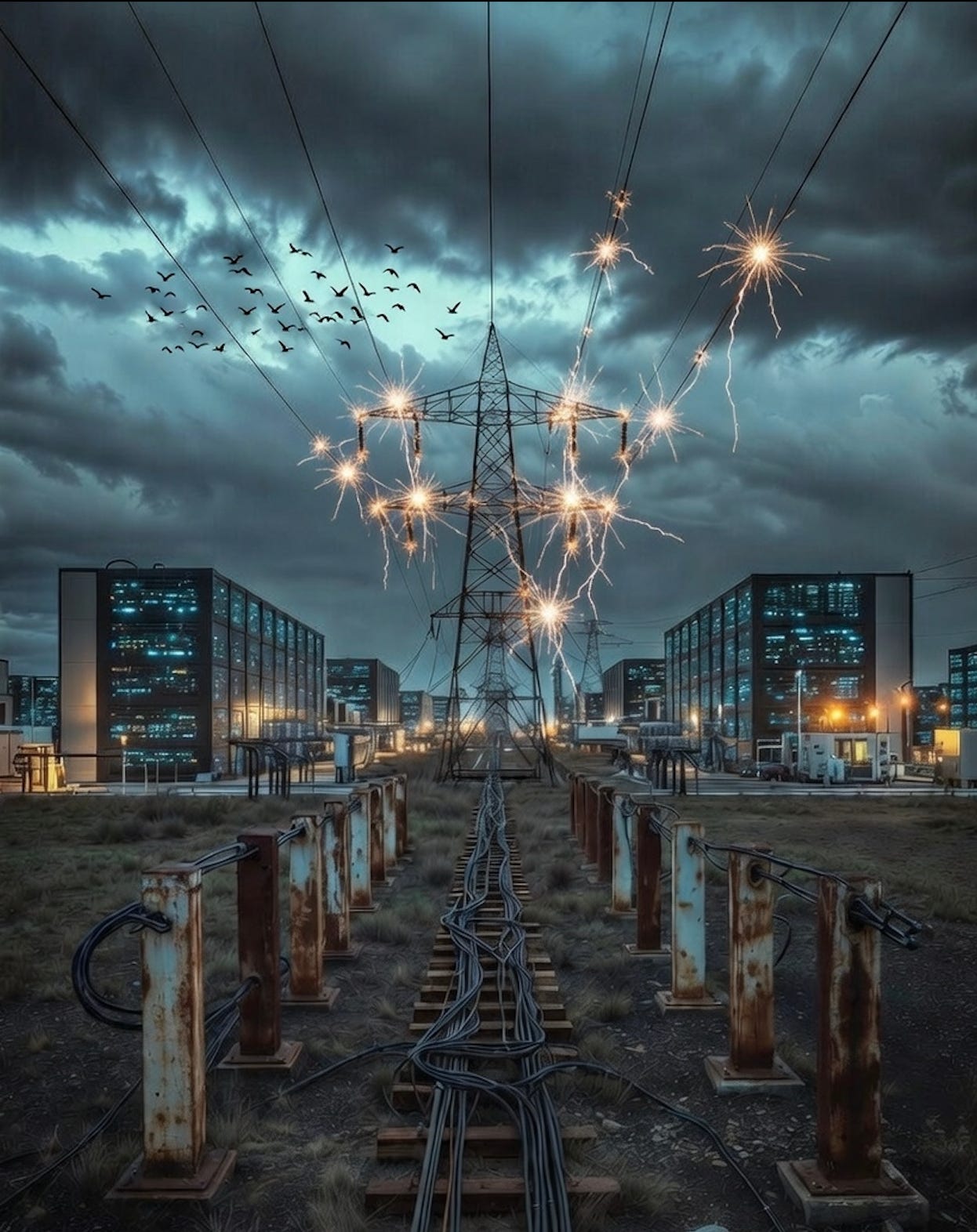
Why Surging AI Power Demand Is Actually Bearish for Electric Utilities
Summary
The explosive growth in AI data center power demand has created a popular narrative that electric utilities are a slam-dunk investment. The market disagrees.
Electric utilities face a capex trap: massive infrastructure investment is required, but regulatory constraints limit their ability to recover costs — compressing margins and destroying risk-reward profiles.
The ImGeld Industry Rating, a proprietary sector-ranking system based on fundamental and momentum factors, currently places Electric Utilities at position #56 out of 60+ industries with a score of just 42.05, having dropped from #52 — firmly in the bottom tier.
Not all utilities are created equal: Gas Utilities operate under different capex dynamics and regulatory frameworks, making sector-level generalizations dangerous for investors.
The Consensus Narrative
Walk into any investment conference today and you’ll hear the same pitch: artificial intelligence is an energy monster. Training a single large language model can consume as much electricity as 100 U.S. homes use in a year. Data centers are projected to double their power consumption by 2030. Hyperscalers like Microsoft, Google, and Amazon are signing unprecedented power purchase agreements.
The conclusion seems obvious: more demand for electricity means more revenue for electric utilities. Buy the sector.
Except the market isn’t buying it. And neither should you.
What the Data Actually Shows
The ImGeld Industry Rating is a quantitative scoring system that ranks industries based on a composite of fundamental strength, earnings momentum, analyst sentiment, and price action. It strips away narrative and measures what actually matters: are companies in this sector generating accelerating earnings, attracting institutional capital, and outperforming?
Electric Utilities currently sit at position #56 with a final score of 42.05, having fallen from #52 in the previous update. That places them firmly in the bottom decile of all rated industries. This isn’t a temporary blip — it reflects a structural deterioration in the sector’s fundamental profile.
The rating system’s assessment is blunt: “Electric utilities are contending with large capital needs to serve rising data-centre power demand, while regulators and customers raise affordability concerns that cloud the sector’s risk-reward profile.”
In other words, the very catalyst bulls are pointing to — surging AI demand — is actually weighing on the sector.
The Capex Trap
Here’s where the paradox crystallizes. To serve exponentially growing power demand, electric utilities need to invest hundreds of billions in new generation capacity, grid upgrades, transmission lines, and interconnection infrastructure. These are capital-intensive, multi-year projects with uncertain returns.
But electric utilities are regulated businesses. They can’t simply raise prices to fund investment. Every rate increase must be approved by state public utility commissions, which are increasingly facing pressure from consumers and politicians concerned about affordability. The result is a squeeze: rising capex obligations on one side, constrained pricing power on the other.
This dynamic is eerily reminiscent of the telecom sector in the early 2000s. The internet boom created seemingly insatiable demand for bandwidth, and telcos poured billions into fiber optic networks. Many of them destroyed shareholder value in the process. The demand was real — but the economics of serving that demand were brutal.
Electric utilities today face the same structural problem. The demand is real. The ability to profitably serve that demand is very much in question.
The Interest Rate Headwind
There’s another factor compressing the sector. Electric utilities are among the most capital-intensive and leveraged businesses in the market. They rely heavily on debt financing to fund infrastructure. In a higher-for-longer interest rate environment, their cost of capital rises significantly, directly impacting returns on new projects.
Additionally, utilities have historically traded as “bond proxies” — investors bought them for stable dividends when fixed-income yields were low. With government bonds now offering competitive yields, the relative attractiveness of utility dividends has diminished. Capital flows out of utility equities and into bonds, creating persistent valuation pressure.
Not All Utilities Are Equal: The Gas Utility Distinction
This is where investors need to be precise rather than painting with a broad brush. While Electric Utilities languish near the bottom of the ImGeld Industry Rating, Gas Utilities are a fundamentally different industry with distinct dynamics.
Gas utilities don’t face the same capex cliff driven by data center demand. Their infrastructure requirements are more predictable and manageable. The regulatory environment, while still present, operates under different cost structures and demand profiles. Gas utilities can have significantly different ImGeld Industry Ratings — and some individual gas utility companies may present compelling fundamental profiles even while their electric cousins deteriorate.
Consider Southwest Gas Holdings (SWX), a gas utility that passes rigorous fundamental screening despite sharing the broader “utility” label. SWX operates under different industry dynamics: its capex needs are not ballooning due to AI demand, its regulatory backdrop is distinct, and its earnings profile can qualify as an outlier within its own sector. Grouping SWX with electric utilities based on the “utility” label alone would be a fundamental analytical error.
This distinction matters enormously for portfolio construction. An investor who avoids all utilities based on the Electric Utilities’ bottom-tier ranking would miss valid opportunities in Gas Utilities. The ImGeld framework correctly separates these industries, allowing for precise sector allocation rather than blunt exclusions.
What Smart Money Is Telling Us
When a quantitative sector-ranking system places an industry in the bottom 10% — and that ranking is deteriorating (from #52 to #56) — it reflects aggregate institutional positioning, earnings trajectory, and price momentum. Smart money isn’t ignoring the AI power demand story. It understands it. And it’s concluded that the economics don’t work in favor of electric utility shareholders.
The stocks benefiting from the AI power build-out aren’t the utilities. They’re the companies selling the infrastructure: turbine manufacturers, electrical equipment makers, grid technology providers, and independent power producers with more flexible pricing structures. These are the picks-and-shovels plays that capture the demand growth without being constrained by regulated rate structures.
Investment Implications
For investors considering sector allocation:
Avoid broad utility exposure based on the AI demand narrative. The ImGeld Industry Rating‘s bottom-tier placement of Electric Utilities reflects genuine fundamental weakness, not a temporary dislocation. The capex-regulation squeeze is structural.
Differentiate within the utility universe. Gas Utilities operate under different dynamics and deserve independent analysis. Individual companies like SWX can present valid investment cases that have nothing to do with the electric utility thesis.
Look for the actual beneficiaries. If you want exposure to the AI power demand theme, look upstream: equipment manufacturers, grid technology companies, and independent power producers. These businesses capture the growth without the regulatory constraints.
Respect the quantitative signals. When fundamental scoring systems, price momentum, and institutional flows all point in the same direction, narrative alone isn’t sufficient to justify a contrarian bet. The market is efficient enough to understand “more demand = good” — when it disagrees, there’s usually a reason.
Conclusion
The Electrical Paradox is a reminder that in investing, the obvious thesis is often the wrong trade. Yes, AI is driving unprecedented power demand. Yes, electric utilities will be called upon to serve that demand. But the economics of serving it — massive capex, regulated pricing, rising financing costs — make electric utilities value traps rather than growth stories.
The ImGeld Industry Rating‘s placement of Electric Utilities at #56 with a score of 42.05 isn’t a mistake. It’s the market telling us what narrative obscures: the juice isn’t worth the squeeze.
Disclosure: The author holds a position in Southwest Gas Holdings (SWX), a gas utility discussed in this article. This article is for informational purposes only and does not constitute investment advice.