
Kharg Island and the Strait of Hormuz: What the US Strike Means for Oil Markets and Portfolio Structure
The US strike on Kharg Island — Iran's single oil export hub — is not just a military event. It is a structural market signal with direct implications for portfolio exposure and risk.

The Shot Heard Across Energy Markets
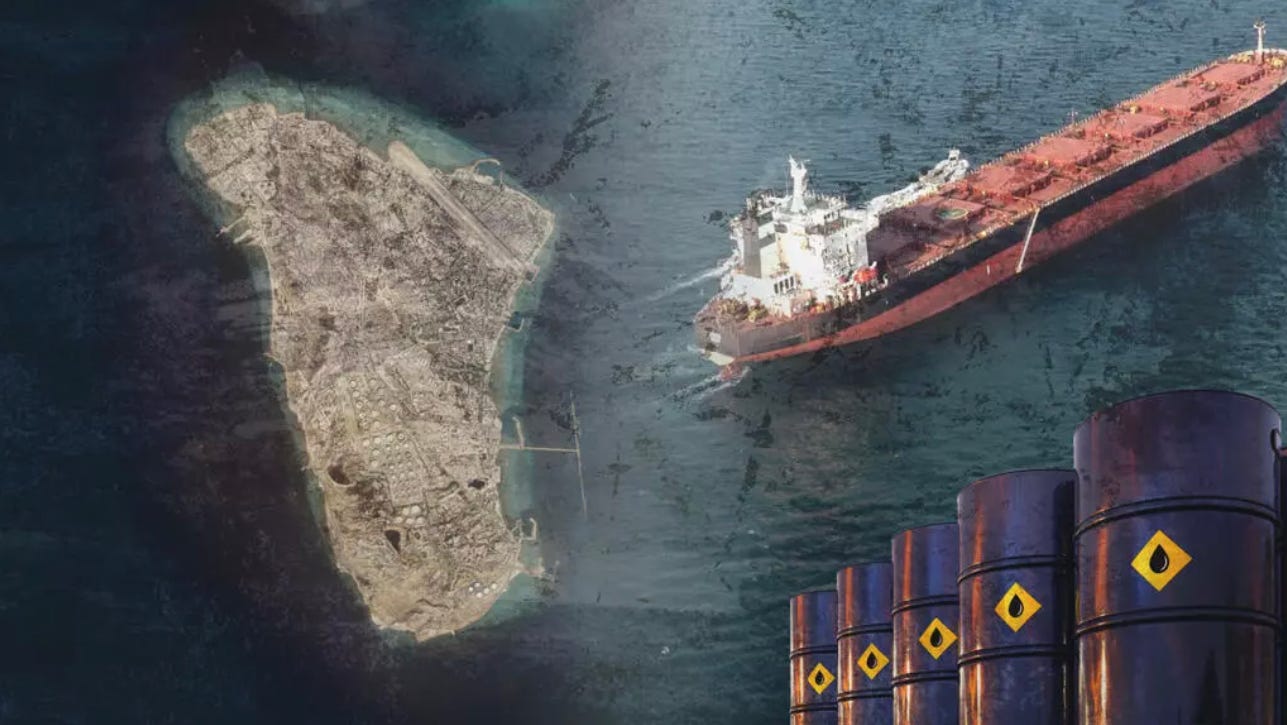
On 14 March 2026, US Central Command struck Kharg Island — a 20-square-kilometre strip of land 30 kilometres off the Iranian coast that processes 96% of Iran’s crude oil exports. Military installations were destroyed. The oil infrastructure was deliberately spared.
That restraint was not a concession. It was a message.
Trump’s accompanying statement made the calculus explicit: if Iran threatens free passage through the Strait of Hormuz, the decision to spare Kharg’s oil infrastructure will change immediately. With 55 storage tanks, 34 million barrels of capacity, and the ability to load ten supertankers simultaneously, destroying the island would eliminate Iran’s economic foundation in a single operation.
Why Kharg Is Irreplaceable
Iran’s coastline is too shallow for supertanker navigation. Kharg was built in deep Gulf waters precisely because the mainland cannot accommodate very large crude carriers. The result is a single-point dependency that Saddam Hussein tried and failed to eliminate in the 1980s — with the military technology available then.
US and Israeli precision strike capability today is categorically different. Iran’s entire export infrastructure passes through one small island that is now, explicitly, a declared target.
What Price Action Is Actually Saying
Oil rose approximately 6% to near $103 on the news. Equity futures declined modestly. The dollar held steady.
This is psychological repricing, not fundamental supply disruption. Pre-conflict cargoes are still at sea — physical tightness typically takes two to three weeks to materialise. What markets are pricing today is uncertainty, not a confirmed supply shock. Uncertainty-driven moves are sharper and more reversible than those driven by fundamental change.
Sector rotation is beginning to reflect the risk premium. Energy names are absorbing inflows. Defensive sectors are attracting capital. Banks are under pressure from credit stress that is only partially oil-related.
The ImGeld Industry Rating provides the structural context for reading these rotations quantitatively. Industries with deteriorating fundamentals do not become better longs because a geopolitical headline creates a temporary dislocation. The underlying ranking remains the anchor.
Portfolio Implications
The situation creates a binary outcome: deterrence succeeds and the spike reverses, or escalation continues and a sustained supply shock follows. Prediction markets price resolution between April and mid-May 2026 as the most probable outcome. Crude futures beyond June show limited forward premium — professionals are not pricing a sustained disruption.
For long–short construction, three disciplines apply:
Selectivity on the long side. Hold only industries with genuine earnings momentum. Diversified long baskets will not be rescued by headline-driven flows.
Patience on the short side. Do not enter short candidates against elevated volatility without technical confirmation. Execution risk in the disorderly phase of a geopolitical spike is high.
Exposure management first. The primary question is not where to enter — it is how much capital to have at risk. Reduce gross exposure while maintaining conviction positions.
ImGeld is structured around this sequencing: assess structural conditions before sizing, not after the headline has already moved the market.
References
US Central Command — Official Statement on Kharg Island Strike, March 2026:
https://www.centcom.mil
IEA — Oil Market Report, March 2026: https://www.iea.org/reports/oil-market-report-march-2026
CME Group — Crude Oil Futures and Market Structure Data: https://www.cmegroup.com/markets/energy/crude-oil/light-sweet-crude.html
Federal Reserve — Financial Stability Report 2025: https://www.federalreserve.gov/publications/financial-stability-report.htm
BIS — Quarterly Review, Geopolitical Risk and Commodity Markets: https://www.bis.org/publ/qtrpdf/r_qt2503.htm