
Most People Trade Without Knowing What Volatility Is. Let's Fix That.
The #1 reason traders blow up — and it has nothing to do with picking the wrong stock.

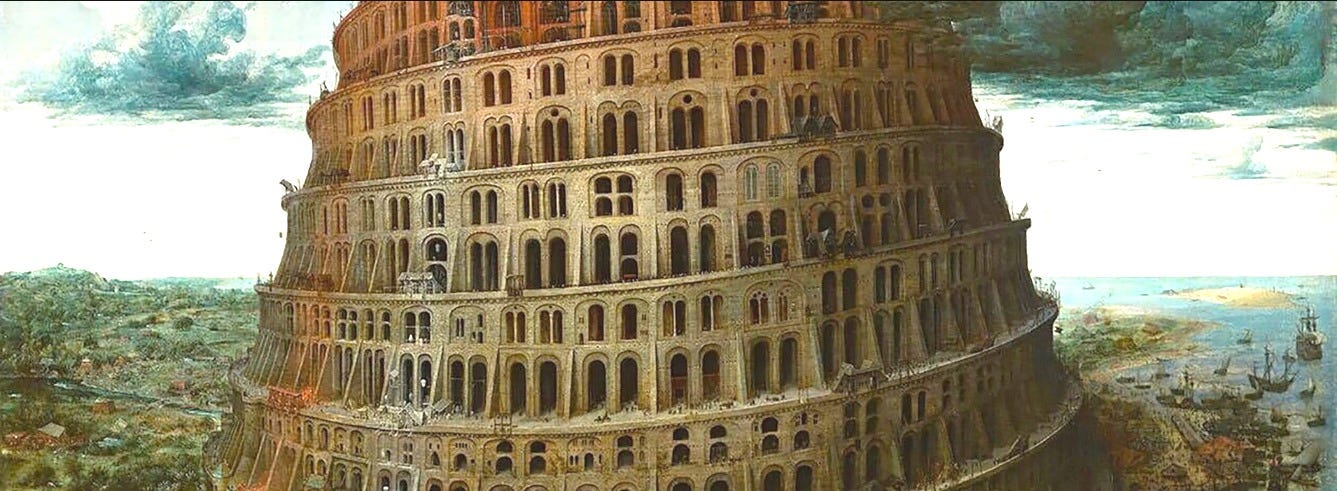
The Tower of Babel
We recently posted this on X:
“Most people buy a stock without ever asking the most important question: How volatile is it?”
Before we go any further, let’s define it properly.
Volatility measures how much and how fast the price of an asset moves up and down over a given period of time. It is expressed statistically as standard deviation — the degree to which returns deviate from their average. The higher the standard deviation, the higher the volatility. The higher the volatility, the higher the risk and the opportunity.
That’s it. Volatility is not a technical indicator. It is the single most important concept in financial markets because it defines both your risk and your opportunity at the same time.
Now let’s put it in context.
The New York Stock Exchange lists over 2,200 stocks. That’s 2,200 instruments, each with its own level of volatility — its own risk and its own opportunity. Compare that to Forex, where you’re looking at 15 to 25 currency pairs at best. Or bonds, where there are maybe 4 to 5 viable ETFs to trade.
When you study the data across all of these — equities, currencies, bonds, commodities — something becomes very clear. Equities offer a far larger opportunity set with far more volatility than anywhere else in financial markets. The data proves this over and over again.
But here’s where most people go wrong: they enter that market without ever measuring the volatility of what they’re trading. They don’t know their risk. They don’t know their opportunity. They don’t know how much a stock can move against them in a week, a month, or a quarter. They go in blind.
Two stocks drop 5%. One usually moves ±1% per day. The other ±6%. Same percentage move. Completely different risk. If you don’t know the volatility of what you’re trading, you get wrong position sizes, wrong stops, and wrong expectations.
This is why the vast majority of traders lose money. Not because they pick the wrong direction. Because they never understood the risk they were taking in the first place.
It's like the Tower of Babel — everyone building higher, nobody speaking the same language, and no one stopping to check if the foundation holds. That's what trading without understanding volatility looks like
Knowing volatility is step one. Knowing which industries are moving — and why — is what separates traders from guessers.
Track all US industries daily, free. → All US Industries Momentum Heat Map